
Published January 9, 2026
San Antonio Traffic Is Getting Worse — Here’s How It’s Quietly Reshaping Home Values and Where People Want to Live

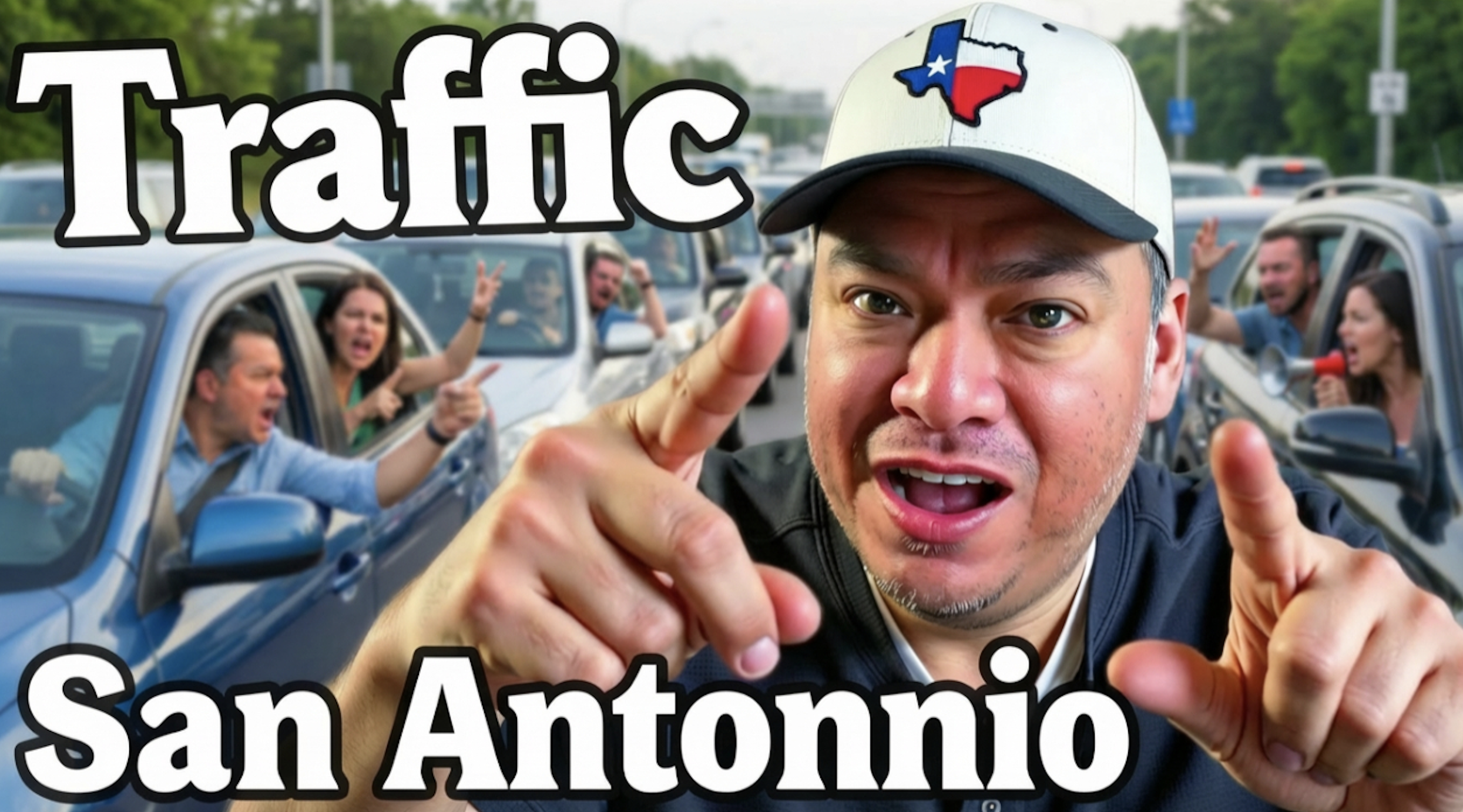
If Traffic Is Ruining Your Morning, You’re Not Imagining It
Is it just me…
Or is San Antonio traffic bold enough to ruin everyone’s mood before 9 AM?
Turns out — it’s not just you.
According to TxDOT data, San Antonio now has 10 of the 100 most congested roadways in Texas.
Yes. TEN.
From the I-10 / I-35 downtown interchange to Loop 1604, Culebra, and the Far West Side, congestion isn’t an inconvenience anymore — it’s part of the city’s daily rhythm.
And while most people think this is just about frustration and brake lights, traffic is quietly doing something much bigger.
It’s reshaping where people choose to live, how neighborhoods grow, and which parts of San Antonio gain or lose real estate demand.
San Antonio’s Traffic Problem, by the Numbers
TxDOT congestion rankings consistently place San Antonio corridors among the most overloaded in the state, including:
-
I-10 and I-35 through downtown
-
Loop 1604 west and northwest
-
Culebra Road and Highway 90 corridors
What’s driving it?
-
Rapid population growth
-
Expanding suburban development
-
Infrastructure struggling to keep pace
-
More drivers commuting longer distances daily
In simple terms: San Antonio grew faster than its roads did.
Why Traffic Impacts More Than Your Commute
Traffic doesn’t just steal time — it changes behavior.
Buyers and renters increasingly factor in:
-
Commute length, not just distance
-
Access to multiple highways
-
Proximity to work hubs, medical centers, and schools
-
Whether congestion will get worse, not better
That shift directly impacts housing demand.
How Traffic Is Reshaping San Antonio Real Estate
1. Commute-Friendly Neighborhoods Gain Value
Areas with easier access to major corridors — or multiple route options — tend to hold value better during congestion spikes.
Buyers are paying closer attention to:
-
I-10 vs. 1604 access
-
Proximity to Loop 410
-
Alternative surface streets
2. “Affordable” Isn’t Affordable If the Commute Is Brutal
Lower home prices lose appeal when paired with:
-
60–90 minute commute times
-
Daily bottlenecks with no clear fix
-
Construction zones that last for years
Time is now a currency.
3. Development Follows Infrastructure
Where TxDOT invests, developers follow.
Where roads stall, growth slows.
Traffic data increasingly signals where future housing demand will concentrate.
Why This Matters for Buyers, Sellers, and Investors
For buyers:
-
Shorter commutes = higher quality of life
-
Traffic-aware purchases protect long-term value
For sellers:
-
Location relative to congestion matters more than ever
-
Homes in well-connected areas gain a pricing edge
For investors:
-
Rental demand rises in commute-efficient zones
-
Tenants prioritize convenience over square footage
What This Means for San Antonio’s Future Growth
San Antonio isn’t slowing down.
But traffic patterns will increasingly decide:
-
Which neighborhoods outperform
-
Where price growth accelerates
-
Which areas feel “too far” despite reasonable prices
Smart buyers and sellers aren’t just watching interest rates — they’re watching traffic maps.
Why We Watch This Closely at Garza Home Team San Antonio Real Estate
At Garza Home Team San Antonio Real Estate, we track infrastructure and congestion trends because roads shape markets long before headlines do.
Traffic isn’t just a nuisance.
It’s a preview of future demand.
Understanding where congestion is rising — and where access is improving — helps our clients stay ahead of San Antonio’s growth curve instead of reacting to it.
Final Thought
San Antonio traffic isn’t getting worse by accident.
It’s the byproduct of a city growing faster than its infrastructure — and that reality is quietly rewriting the real estate map.
The question isn’t:
“Why is traffic so bad?”
It’s:
“How will traffic change where people want to live next?”
And if you commute here, you already know the answer.
👇 Which road gets your vote for “Worst Highway in Texas”?
Drop it below — we all need to vent a little.

Jesse Rene Garza
| Garza Home Team | Keller Williams City View
or another way