Published March 6, 2026
San Antonio Neighborhoods 2026: The Honest Housing Math Behind the Top 8 Areas Buyers and Sellers Need to Know

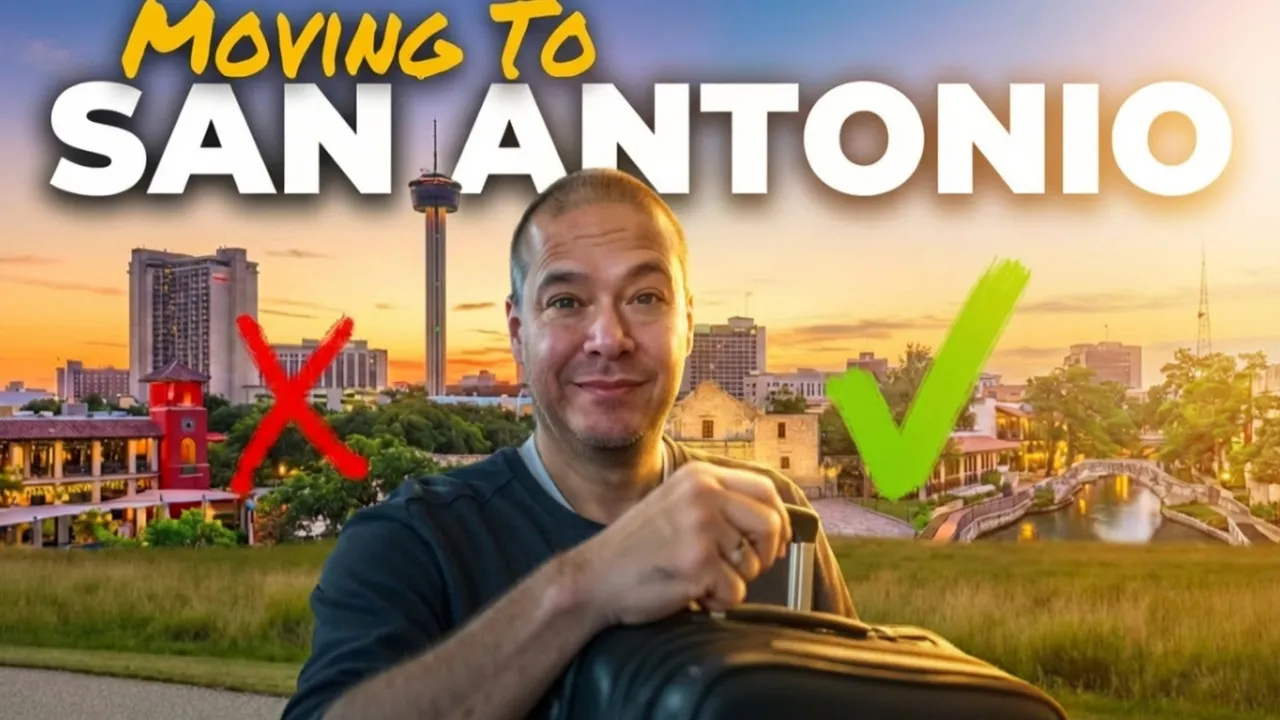
The Honest Housing Math Behind the Top 8 Areas — What Buyers, Sellers, and Relocators Actually Need to Know Before They Sign Anything
By Garza Home Team | San Antonio Real Estate | Updated 2026
❝ You are not just buying a house. You are buying a logistical reality. ❞
You've seen the content. The glossy YouTube videos. The blog posts with stock photos of smiling families and headlines like 'Move to San Antonio — It's Cheap!' or 'Alamo Heights: The Perfect Place to Live.' They show you the brochure version of this city. They show you the best-lit photo taken on the best possible day with the listing agent's best possible spin applied.
This is not that.
This is the balance sheet.
What you're about to read is a ground-level, neighborhood-by-neighborhood breakdown of the top 8 areas in the San Antonio metro — written for buyers who want to make a smart decision, sellers who want to understand their market position, and anyone who's thinking about making a move and wants actual data instead of real estate cheerleading.
We're going to talk about price per square foot. Commute math. Equity trajectory. Who's actually buying in each area and why. What the HOA situation really looks like. Where the infrastructure is struggling to keep up with demand. And where — if you're paying attention — the real opportunity is hiding in plain sight.
By the end of this, you'll know more about these eight neighborhoods than most people who have lived in San Antonio for years. And you'll be equipped to make a decision that actually serves your family, your finances, and your future — not just the one that photographs well.
Let's get into it.
Why Picking the Right San Antonio Neighborhood in 2026 Matters More Than It Ever Has
Before we get into the neighborhood-by-neighborhood breakdown, we need to talk about the context — because the context has changed dramatically, and most people are still making neighborhood decisions with 2021 assumptions.
The National Association of Realtors released data in early 2025 that should stop every buyer and seller in their tracks. The median age of American homeowners has climbed to 57.5 years — up from 54 in 2010. The median age of first-time buyers has hit 40 years old for the first time in recorded history. And 1.8 million millennial and Gen Z buyers have been effectively erased from the housing market by the combination of elevated home prices, high mortgage rates, student loan debt, and a national housing supply gap that has now reached 4.03 million units.
What does this mean for San Antonio specifically?
It means that the neighborhoods and price points that used to absorb first-time buyers consistently — the entry-level corridors, the affordable suburbs, the starter-home pockets — are under serious pressure. It means that the buyers still in the market are more discerning, more cautious, and more likely to walk from a deal that doesn't pencil out perfectly. It means that sellers who price based on peak 2022 comps are going to sit. And it means that buyers who do the homework — who understand which neighborhoods have genuine long-term equity stories and which ones are being propped up by hype — are going to win in a way that their peers who waited or guessed will regret for years.
San Antonio is not immune to national trends. But it has structural advantages that most major metros don't: a massive military population that creates consistent relocation demand, a price point that is still meaningfully below Austin and Dallas, a diverse economic base, and a growing number of employer announcements that are continuing to bring jobs and residents to the metro. Those structural advantages are real. But they don't make every neighborhood equally smart, equally safe, or equally positioned for the kind of equity growth that actually builds generational wealth.
The neighborhood you choose is the most leveraged real estate decision you will make. More than the interest rate. More than the inspection. More than the closing cost negotiation. Get the neighborhood right and almost everything else is correctable. Get it wrong and you're holding a depreciating asset in a market that rewards location above all else.
Here is how we picked these eight neighborhoods: volume of buyer inquiries, diversity of buyer profiles, representation of the full San Antonio market spectrum from urban core to Hill Country gateway, and frankly — the frequency with which we see buyers make expensive mistakes in each area because they didn't understand the full picture before they fell in love with a listing.
Read every section. Even the ones you think don't apply to you. Because understanding the neighborhoods you're NOT buying in is often what makes your actual decision clearer.
The Pearl District — San Antonio's Most Photographed Real Estate Decision
The History
The Pearl District's origin story is one of the most compelling urban revitalization narratives in Texas. What is now San Antonio's premier urban lifestyle destination began in 1883 as the Pearl Brewery — a massive complex on the banks of the San Antonio River that became one of the largest breweries in the American Southwest. For over a century, it was the beating industrial heart of the city's north downtown area. When it closed in 2001, it left behind a collection of historic brick buildings that sat underutilized until a visionary adaptive reuse project transformed it into what it is today: a 22-acre mixed-use development anchored by restaurants, boutique retail, a hotel, apartments, a culinary school, and one of the most celebrated weekend farmers markets in Texas.
The Pearl isn't just a neighborhood — it's a proof of concept for what urban revitalization can look like when it's done with genuine architectural and cultural respect for what came before. The historic brewery buildings have been preserved and repurposed rather than demolished and replaced. The result is a neighborhood with a physical sense of history that San Antonio's newer master-planned suburbs simply cannot manufacture.
Who's Buying Here
The Pearl buyer profile is specific and consistent: urban professionals, remote workers who prioritize walkability over space, empty nesters downsizing from larger suburban homes, investors targeting short-term rental demand, and out-of-state relocators from higher-density markets like New York, Chicago, or San Francisco who see San Antonio's Pearl pricing as a relative bargain despite it being the city's most expensive urban real estate.
What almost none of these buyers is: a family with school-age children looking for their long-term forever home. The Pearl is optimized for a lifestyle, not a lifecycle. That's not a criticism — it's just the accurate description of who this market serves well and who it doesn't.
The Housing Math
Price per square foot in the Pearl District and immediately adjacent areas is among the highest in San Antonio. Condominiums and townhomes in the area regularly trade at price-per-square-foot figures that would be considered average in Austin or unremarkable in Denver, but that represent a significant premium relative to comparable square footage elsewhere in the San Antonio metro.
The critical question to ask yourself before buying in the Pearl is not 'can I afford this?' but rather 'what exactly am I paying for?' The answer is honest: you are paying for proximity. You are paying for the ability to walk to some of the best restaurants in Texas. You are paying for a community identity — the farmers market on Saturday morning, the Hotel Emma experience, the San Antonio River trail. You are not paying for square footage. You are not paying for a great school district in the traditional sense. You are not paying for a garage, a yard, or the physical space that growing families typically require.
For the buyer whose life genuinely looks like the Pearl's lifestyle proposition — who works remotely, values urban density, eats out regularly, and has no plans to need a playroom or a backyard — the premium can absolutely be justified. The Pearl has demonstrated sustained demand and resale strength. It is not a speculative market.
For anyone whose life doesn't match that description, the math doesn't work. And buying a lifestyle neighborhood when your actual lifestyle doesn't fit it is one of the most common — and most expensive — real estate mistakes we see.
The Equity Thesis
Long-term appreciation in the Pearl and surrounding urban core has been driven by the ongoing development of the San Antonio River corridor, continued investment in downtown infrastructure, and the consistent demand from a buyer profile that will remain active in San Antonio for the foreseeable future. The short-term rental market — where permitted — has provided an additional income layer for investor buyers.
The risk to Pearl equity is macroeconomic: if remote work trends reverse and urban density markets nationwide soften simultaneously, premium urban product in secondary markets like San Antonio could feel pressure. But as of 2026, the Pearl's demand fundamentals remain intact.
❝ The Pearl: Buy it for the lifestyle. Know exactly what you're buying and what you're not. The housing math rewards the right buyer and punishes the wrong one equally. ❞
King William Historic District — Old Money, Real Restrictions, Extraordinary Character
The History
King William is one of the oldest and most architecturally significant residential neighborhoods in Texas. Established in the latter half of the 19th century by wealthy German merchants and businessmen who built their grand homes within walking distance of the commerce of downtown San Antonio, the district is named for Kaiser Wilhelm I of Prussia — a reflection of the cultural identity of its founding residents. The Victorian mansions, Greek Revival cottages, and Italianate estates that line King William Street and its surrounding blocks represent some of the most remarkable residential architecture anywhere in the American South.
The neighborhood received National Historic Landmark District designation in 1972, a recognition that has simultaneously protected its extraordinary character and created the regulatory framework that defines — and complicates — ownership in King William today.
The Historic Designation Reality
Historic designation is one of the most misunderstood factors in residential real estate. Buyers frequently see 'historic district' and think 'preserved charm.' What they should be thinking is 'additional layer of regulatory oversight on every structural and cosmetic modification to the property.'
In King William, exterior modifications to contributing properties require review and approval from the San Antonio Historic Design and Review Commission. This means that replacing windows, modifying rooflines, changing exterior paint colors, adding elements to the facade, or making structural changes that are visible from the street all require a process — one that has a timeline, a set of design standards, and outcomes that are not always aligned with the owner's vision or budget.
This is not a reason to avoid King William. It is a reason to enter King William with full information about what you're taking on. The buyers who thrive in this neighborhood are those who embrace the stewardship responsibility — who see ownership here as participation in something historically significant rather than as simply acquiring a residential asset.
Who's Buying Here
King William attracts a specific and generally sophisticated buyer: architects, artists, academics, attorneys, physicians, and others for whom the historical and cultural identity of their home is a primary value rather than a secondary consideration. Investors with experience in historic rehabilitation projects are also active in the market. First-time buyers and families looking for ease and predictability are generally not the right fit for King William, and the ones who buy in without understanding the full picture of what ownership entails are almost always the ones who struggle.
The Housing Math
Entry price in King William is significant. The combination of location, lot size in many cases, architectural significance, and neighborhood identity commands a premium that is genuinely earned — this is not manufactured luxury. But the cost of ownership extends meaningfully beyond the purchase price. Maintenance of Victorian and other 19th and early 20th century architecture is fundamentally different from maintaining a 2015 suburban build. Systems are older. Materials are less standard. Repair and renovation work requires craftspeople and contractors who specialize in historic construction — and who charge accordingly.
Buyers who run their numbers on King William using suburban maintenance cost assumptions will be surprised — and not pleasantly — by the reality of what it costs to maintain a property of this age and character properly.
The Equity Thesis
King William has demonstrated remarkable long-term appreciation stability. The combination of fixed supply — no new historic properties can be created — growing demand from buyers who specifically seek this type of neighborhood, and proximity to the energy of Southtown and the broader downtown revitalization creates a favorable long-term picture. Short-term rental demand in King William is also meaningful, subject to local regulations.
The equity risk in King William is deferred maintenance. Properties that have not been properly maintained over time, or that have had non-compliant modifications made without historic review, can carry hidden costs that significantly affect return on investment. Due diligence in King William should be more extensive than in any other neighborhood on this list.
❝ King William: This neighborhood is for legacy buyers, not casual acquirers. Know what you're taking on, do thorough due diligence, and it can be one of the best real estate decisions you ever make. ❞
Alamo Heights — The Golden Child, The Price of Entry, and the Question Nobody Asks
The History and Identity
Alamo Heights is, by most conventional metrics, the safest bet in San Antonio real estate. It is the city's most established prestige neighborhood — incorporated as an independent city within the San Antonio metro in the early 20th century, with its own school district, its own police department, its own fire department, and its own municipal identity that has been carefully maintained and fiercely protected for over a century.
The Alamo Heights Independent School District is consistently ranked among the top school districts in Texas. The neighborhood's architectural diversity — Mediterranean revival, Colonial, Tudor, Craftsman bungalows, and midcentury modern — is anchored by mature tree canopy that simply cannot be replicated in any newer development. The community has a genuine small-town character, with neighborhood events, a walkable village commercial district on Broadway, and a residents' identity that is unusually cohesive for a neighborhood of its size.
These are not manufactured attributes. They are the result of a century of cultivation, and they are genuinely valuable.
The Catch Nobody Mentions
Here it is: you will pay significantly more for a 1,800 square foot home from 1955 in Alamo Heights than you will for a brand-new 2,800 square foot luxury build ten miles north. You are paying for the zip code. Full stop.
That trade-off is entirely rational for a specific buyer — one for whom the school district is non-negotiable, for whom the community identity and walkability are primary values, and for whom the long-term resale thesis in Alamo Heights (which has been consistently validated over decades) outweighs the square-footage differential.
It is not rational for the buyer who is primarily optimizing for space, for the buyer who is coming from a state where $800,000 buys a considerably larger home and expects that dollar amount to deliver the same here, or for the buyer who wants new construction warranties and modern systems without the premium associated with renovation of midcentury housing stock.
Who's Buying Here
Established families with school-age children for whom the AHISD affiliation is a non-negotiable. Move-up buyers from other San Antonio neighborhoods who have built equity and are upgrading to what they perceive as the pinnacle of San Antonio residential desirability. Out-of-state relocators, particularly from major metropolitan areas, for whom Alamo Heights' price point represents genuine value relative to where they're coming from. And investors and second-home buyers who understand that Alamo Heights demand has historically been the most recession-resistant in the metro.
The Housing Math
Alamo Heights operates on a scarcity model. Supply is fundamentally constrained — there is no new land to develop within the incorporated city limits. Demand from the profiles described above is consistent and relatively rate-insensitive at the upper end of the market. This combination has historically produced appreciation that outperforms the broader San Antonio market on a percentage basis and dramatically outperforms on an absolute dollar basis.
Renovation costs in Alamo Heights deserve serious attention. The midcentury housing stock, while charming, often requires plumbing, electrical, HVAC, and foundation work that adds meaningful cost above purchase price. Buyers who compare Alamo Heights listing prices to comparable square footage in newer developments without factoring in renovation delta are making an apples-to-oranges comparison that can lead to significant financial surprise.
The calculus: if school district prestige, community identity, long-term resale stability, and the specific lifestyle of Alamo Heights are your primary metrics, the premium is justified and historically supported. If those are not your primary metrics, you can achieve better housing math elsewhere in the metro.
❝ Alamo Heights: The safest long-term bet in San Antonio real estate — if you understand exactly what you're buying and why. The premium is real, the value is real, and the math works for the right buyer. ❞
Stone Oak — The Suburban Dream With a Highway Tax You Need to Calculate Before You Buy
The Development Story
Stone Oak represents the quintessential North San Antonio master-planned suburban expansion of the 1980s and 1990s — a deliberate, amenity-rich community built to serve the professional families who were gravitating toward the northern corridors of the metro as the city's commercial and corporate activity increasingly concentrated in that quadrant. The neighborhood's development was anchored by gated communities, HOA-managed common areas, top-rated public schools within the North East Independent School District, and the kind of built-in infrastructure — medical facilities, retail, restaurants, fitness centers — that requires years of organic development to accumulate in less-planned communities.
Stone Oak has been one of the most consistently in-demand residential areas in San Antonio for over three decades. Its school ratings serve as a property value anchor that is remarkably resistant to broader market fluctuations. In essentially every market cycle since Stone Oak's development, the neighborhood's appreciation has tracked steadily upward, driven by relentless family demand that shows no signs of abating.
The Commute Tax — And Why It Has to Be Part of Your Housing Math
Here is the conversation that is almost never had upfront in Stone Oak transactions: if you work in or near downtown San Antonio, the intersection of Highway 281 and Loop 1604 is going to be a significant factor in the daily quality of your life. The traffic in this corridor — particularly during morning and evening commute hours — is not a minor inconvenience. It is a genuine, measurable cost of living in Stone Oak that needs to be calculated in time, fuel, vehicle wear, and the less quantifiable but very real toll of daily stress.
The responsible way to evaluate Stone Oak is to drive your actual commute at your actual commute time before you make an offer. Not on a Saturday morning. Not on a holiday. On a Tuesday at 7:45am. Then drive it again at 5:30pm. Then decide whether the neighborhood's amenities, school ratings, and housing quality justify that daily reality for your specific situation.
For families where at least one parent works remotely, or where both parents work in the Stone Oak/North San Antonio employment corridor, the commute issue disappears entirely and the neighborhood's appeal becomes nearly inarguable in its market segment. For families with both parents commuting downtown daily, the commute tax is real and meaningful.
Who's Buying Here
Medical professionals working at the cluster of hospitals and medical facilities in and around the Stone Oak corridor. Technology and corporate professionals based in the North San Antonio employer cluster. Military officer families, particularly those stationed at JBSA-Fort Sam or Randolph who can manage the commute and prioritize school district and neighborhood quality. And a consistent stream of out-of-state relocators who have been told by every friend and colleague who has ever moved to San Antonio that Stone Oak is 'the nicest area' — which, on balance and at face value, is not an inaccurate characterization.
The Housing Math
Stone Oak offers a range of product types that provides legitimate entry points across multiple buyer profiles: from townhomes and smaller single-family homes for buyers optimizing for location within a budget, to large custom homes in gated communities at the market's upper end. HOA fees are a real line item in Stone Oak housing math — the community's amenities are maintained and funded by those fees, and they vary considerably by specific community. Buyers who compare Stone Oak gross listing prices to listings in non-HOA communities without adjusting for the fee differential are making an incomplete comparison.
Appreciation in Stone Oak has been steady and reliable rather than spectacular. This is a feature, not a bug, for the family-stability buyer. You are not buying Stone Oak for a windfall flip thesis. You are buying it for a community that will hold its value, deliver on its lifestyle promises, and resell consistently to the same demand profile that bought it from you.
❝ Stone Oak: Do the commute before you make the offer. If the math works for your life, it's one of the most reliable family-market neighborhoods in the city. ❞
Alamo Ranch — San Antonio's Volume Play, and Why That's Actually a Legitimate Thesis
The Development Story
Alamo Ranch is the largest master-planned community in San Antonio — a sprawling development on the city's far west side that began in the early 2000s and has been growing continuously ever since. By area and by housing unit count, Alamo Ranch represents the most significant residential development of the 21st century in the metro, and its growth shows little sign of slowing.
The thesis of Alamo Ranch has always been affordability and scale — providing more house for the dollar than comparable communities in the city's established northern quadrants, supported by quality schools through the Northside Independent School District, improving commercial and medical infrastructure, and new construction product that comes with warranties and modern systems rather than the maintenance uncertainty of older housing stock.
More House for Your Money — Period
This is the honest, accurate, and primary selling point of Alamo Ranch, and it is a legitimate one. At any given point in the San Antonio market cycle over the past decade, a buyer's dollar has gone meaningfully further in Alamo Ranch than in Stone Oak, Helotes, or Alamo Heights. The differential in square footage and in new construction features for a given price point is not marginal — it is substantial.
For the buyer who is optimizing for living space, modern finishes, new construction warranties, and school quality within a specific budget constraint, Alamo Ranch is a rational and often superior choice to paying a premium for a smaller, older home in a more established neighborhood.
The Growing Pains — And They Are Real
Alamo Ranch's primary challenge is the infrastructure gap that has historically accompanied its rapid growth. Culebra Road, the primary commercial and traffic artery for much of the community, has been chronically congested during peak hours in ways that are disproportionate to what the road was originally designed to accommodate. The commercial development — while improving — has lagged the residential growth, meaning that residents have historically needed to travel further for services that more established communities have within walking or short driving distance.
These are genuine quality-of-life factors that need to be in any honest Alamo Ranch evaluation. They are also factors that the ongoing infrastructure investment in the corridor is gradually addressing. The question for buyers is: are you comfortable buying into a community that is still working out its growing pains, in exchange for the substantial financial advantages it delivers?
The Investor Thesis
From a real estate investment perspective, Alamo Ranch's rental demand fundamentals are among the strongest in the metro. The same affordability dynamics that make it attractive to owner-occupant buyers create consistent rental demand from the large population of working families who want to be in the area but have not yet achieved purchase readiness. Cap rates in Alamo Ranch have historically been competitive relative to more expensive San Antonio submarkets, and vacancy rates have been low.
For the buy-and-hold investor building a San Antonio portfolio, Alamo Ranch represents a volume play with real cash flow potential — not the prestige address, but the numbers that actually work.
❝ Alamo Ranch: The best housing math in San Antonio for the dollar. Know the density and traffic trade-offs. For investors and budget-maximizing buyers, the numbers speak for themselves. ❞
Harlandale — San Antonio's Most Underappreciated Opportunity and What Smart Buyers Are Doing Here
The Honest Context
Harlandale is the neighborhood that doesn't get mentioned in the glossy guides — which is exactly why it belongs on this list. Located on San Antonio's south side, Harlandale is one of the city's oldest established residential communities, with roots in the early 20th century and an architectural inventory that tells the story of working-class San Antonio in ways that the city's newer developments cannot.
We want to be direct about what Harlandale is and isn't in 2025. It is not a luxury market. It is not a fully gentrified neighborhood. It does not have the school ratings of Stone Oak or the cachet of Alamo Heights. What it has is price point, authentic community character, architectural bones that new construction cannot replicate, and an appreciation thesis that is grounded in the long-term trajectory of San Antonio's southward development and investment.
Who's Actually Buying Here
There are three distinct buyer profiles active in Harlandale right now. First: first-time buyers who have been priced out of the Northside and are willing to make the location trade-off in exchange for achieving ownership rather than continuing to rent. Second: investors — both local and out-of-state — who are recognizing the neighborhood's appreciation potential before it becomes fully consensus and priced in. Third: a small but growing cohort of buyers who are specifically seeking out the authentic San Antonio character, architectural diversity, and community identity that Harlandale has maintained while much of the city has been homogenized by master-planned development.
The Appreciation Thesis
San Antonio has been expanding its investment in south side infrastructure, connectivity, and community development consistently over the past decade. The San Antonio River improvements, the Mission Trail development, increased attention to the city's south side historic character, and the general southward pressure of urban development from the downtown core have all created conditions that favor Harlandale appreciation over the medium and long term.
Early-mover thesis: the buyers who are entering Harlandale in the current cycle are buying at a price point that reflects today's perception of the neighborhood, not its trajectory. The risk is that the trajectory takes longer to materialize than anticipated, or that broader market conditions interrupt the appreciation story. The upside is a meaningful equity gain if the thesis plays out — and the historical pattern of south side San Antonio development strongly supports the directional case.
The Housing Math
Harlandale offers the lowest entry price points of any neighborhood on this list, which simultaneously represents its primary appeal and its primary risk factor. Low entry price means lower absolute equity accumulation in dollar terms even with strong percentage appreciation. It also means that the buyer pool for resale is constrained to buyers who are comfortable with the neighborhood, which historically means longer days on market and more price sensitivity at the time of sale.
For the investor calculating cash-on-cash return, Harlandale's low entry price with competitive rental rates — driven by the large renter population on San Antonio's south side — creates an attractive yield profile. For the owner-occupant first-time buyer, the calculation is about achieving ownership and building equity in a market where the trend line is pointing in the right direction.
❝ Harlandale: This is the opportunity neighborhood on this list. Not the easiest sell, not the most obvious choice — but for the buyer with patience and the investor with vision, the math is compelling in a way that the expensive neighborhoods simply cannot replicate. ❞
Helotes — The Hill Country Gateway That Doesn't Make You Choose Between City and Country
The Identity
Helotes occupies a unique position in the San Antonio metro that is genuinely difficult to replicate: it sits at the northwestern edge of the city's developed area, at the precise point where suburban San Antonio transitions into the Texas Hill Country, and it has managed to maintain a small-town character and community identity that most communities in its position have long since surrendered to generic suburban development.
The name recognition of Helotes outside of San Antonio tends to center on John T. Floore's Country Store — the legendary live music venue that has hosted Willy Nelson, Hank Williams, Bob Wills, and virtually every significant name in Texas country music since 1942 — and the annual Cornyval Festival, which draws tens of thousands of visitors and serves as a genuine community celebration rather than a manufactured attraction. These are not trivial cultural assets. They represent a community identity that has real value in a real estate context: people who move to Helotes for the community tend to stay, which creates the kind of residential stability that supports long-term property values.
The Geographic Advantage
Helotes is effectively the last community on the northwestern edge of the San Antonio metro where you can feel genuinely close to the Hill Country while remaining within practical commuting distance of the city's employment centers. You're ten minutes from a major HEB. You're accessible to the Medical Center employment cluster. You have reasonably direct access to Highway 16 and Loop 1604.
The community is served by the Northside Independent School District, which consistently ranks among the largest and most highly regarded in Texas — an important factor for families with school-age children that significantly differentiates Helotes from the truly rural communities further out in the Hill Country.
Who's Buying Here
Families who want more land and space than San Antonio proper can provide at their budget, but who are not ready or able to commit to a full Hill Country rural lifestyle with the commute implications that entails. Military families, particularly those who need reasonable access to JBSA installations on the city's west and northwest corridors. Remote workers who have been liberated from daily commuting and are looking to maximize their quality of life per dollar. And move-up buyers from Alamo Ranch and other West Side communities who are ready to trade some of the density of those communities for more space and a different pace.
The Housing Math
Helotes pricing sits between the established premium of Stone Oak and the entry-level positioning of Alamo Ranch — which is both its appeal and its challenge. It offers meaningfully more land and often more home for the dollar than comparable listings further east in Stone Oak, while commanding a premium over the denser west side communities that reflects its lifestyle differentiation.
Appreciation in Helotes has been solid and steady, driven by the consistent demand from the profiles described above and the geographic constraint on supply — there is only so much land at the Hill Country edge of the metro, and the most desirable portions of Helotes proper have been developed. New development continues in adjacent areas, but the character and identity of the original community is effectively fixed.
❝ Helotes: The neighborhood for buyers who want the Texas they imagined when they first thought about moving here — without paying the full price in commute time that the more rural Hill Country communities demand. ❞
Bulverde — The Front Porch of the Hill Country, a Different Tax Environment, and the Fastest Growing Demand Story in the Metro
The Strategic Position
Bulverde sits north of San Antonio in Comal County — a geographic and jurisdictional position that creates a meaningfully different ownership experience compared to properties within Bexar County and the city of San Antonio proper. This is not a minor distinction. It has real implications for property taxes, school district affiliation, and the overall cost of ownership that buyers consistently underweight in their initial analysis.
Comal County's growth trajectory is among the most impressive in Texas. The county has been one of the fastest-growing in the entire United States for multiple years, driven by the combination of New Braunfels' explosive expansion, the spillover of San Antonio metro growth northward, the appeal of the Hill Country lifestyle at a price point that remains below Central Texas' most expensive markets, and increasingly, the work-from-home migration that began in 2020 and has permanently restructured where Americans are choosing to live.
Land. Space. Stars.
The primary value proposition of Bulverde is the most fundamental in residential real estate: land. You can buy meaningfully more of it here, at a lower per-acre price, than you can in the developed neighborhoods closer to San Antonio's urban core. For the buyer who has been dreaming of a property where children can run, where a workshop or a detached garage is possible, where the night sky is visible rather than washed out by urban light pollution — Bulverde is where that dream is still financially accessible.
The Texas Hill Country topography — cedar, oak, limestone outcroppings, rolling terrain — is genuinely beautiful and contributes meaningfully to quality of life in ways that are difficult to quantify but that buyers who have lived in both flat suburban environments and Hill Country properties consistently and emphatically identify as transformative.
The Trade-Off: Miles
There is no version of the Bulverde value proposition that doesn't come with a commute trade-off for buyers who need to be physically present in San Antonio on a regular basis. Highway 281 between Bulverde and San Antonio carries significant traffic during peak hours. The drive to downtown San Antonio from Bulverde proper is typically 35 to 50 minutes under normal conditions — longer during peak traffic periods.
This trade-off has been dramatically recalibrated by the remote work revolution. For the buyer who is commuting to San Antonio two or three days per week rather than five, the calculation is entirely different than it was for the buyer of 2018. The miles are the same. The frequency of driving them has changed. For many buyers, this shift has made Bulverde — which was previously aspirational but impractical — suddenly achievable as a primary residence.
The Tax and School Environment
Property taxes in Comal County deserve careful attention. Texas property taxes are among the highest in the nation as a matter of structural state policy, and rates in Comal County reflect a combination of county, school district, and municipal tax levies that buyers need to calculate specifically for any property under consideration rather than assuming comparability to Bexar County rates.
Comal ISD, which serves most of Bulverde, is a well-regarded school district that has grown substantially as the county's population has expanded. For buyers with school-age children, Comal ISD represents a quality option — though it is a different context from the established prestige districts like AHISD or the depth of NISD's resources.
The Demand Surge and What It Means
Bulverde's demand has increased materially over the past five years, driven by the factors described above. This demand surge has had the entirely predictable effect of increasing prices and reducing the number of genuinely undervalued properties that were available in the market five years ago. The early-mover window in Bulverde has narrowed, though it has not closed. Buyers who enter the Bulverde market in 2025 are entering at higher prices than those who entered in 2019 or 2020, but are still entering at prices that are likely to look favorable relative to where the market goes over the next decade as north San Antonio metro growth continues.
❝ Bulverde: If remote work is your reality and land is your priority, this is where your dollars go furthest in the entire metro. The early-mover window is narrowing. The opportunity is still real. ❞
How to Actually Make the Neighborhood Decision: The Housing Math Framework
You have now read honest assessments of eight neighborhoods. Some of them probably resonated immediately. Some of them probably confirmed what you already suspected. And some of them may have introduced considerations that hadn't previously been part of your thinking.
Before we wrap this up, we want to give you a practical framework for making the neighborhood decision — because the decision is ultimately not about which neighborhood is objectively 'best.' It's about which neighborhood fits your specific housing math.
Step 1: Define Your Non-Negotiables Honestly
Not your preferences. Your non-negotiables. The factors that, if a neighborhood doesn't deliver on them, disqualify it from consideration regardless of its other attributes. Common non-negotiables include: a specific school district, a maximum commute time for a specific commute route, a minimum lot size or bedroom count, a maximum monthly all-in housing cost, or a specific proximity to family members or employment.
Write these down. Rank them. Then apply them to the eight neighborhoods above with honesty. This exercise alone will typically eliminate half the field immediately.
Step 2: Calculate the All-In Monthly Cost, Not Just the Purchase Price
The purchase price is the beginning of the housing math, not the end. For each neighborhood you're seriously considering, calculate the total monthly cost of ownership: mortgage principal and interest at today's rates on your expected purchase price, property taxes at the actual rate for that specific property's county and municipality, homeowner's insurance, HOA fees where applicable, and a realistic monthly reserve for maintenance based on the age and condition of the housing stock in that neighborhood.
Then compare that number to your rent. Then compare it to what you'd be paying in the other neighborhoods on your list at a comparable purchase price. The differences can be significant — sometimes hundreds of dollars per month — and they're almost always invisible in the headline listing price comparison.
Step 3: Drive the Commute Before You Fall in Love With a Listing
This sounds obvious. It is almost never done. Buyers consistently allow themselves to fall in love with a home before they have driven the commute they will make from that home to their workplace, their children's school, and the other destinations that are part of their daily life. Do the commute first. At the actual time of day. Then decide if you love the house.
Step 4: Understand the Equity Thesis, Not Just the Current Market
You are not just buying a home for the next two years. You are buying an asset that will likely be the largest single holding in your personal balance sheet for an extended period. Understand the forces that have driven appreciation in each neighborhood historically. Understand the constraints on supply that protect future value. Understand the demand drivers that will sustain buyer interest when it's time for you to sell.
The neighborhoods with the strongest equity theses are not always the ones with the highest current prices. Sometimes the strongest thesis is in the neighborhood that is still in its early chapters — where the direction is clear but the price hasn't fully caught up yet.
Step 5: Talk to Someone Who Works This Market Every Day
Everything in this blog post is genuinely useful. It is also inherently general — written to be applicable to the widest possible range of readers rather than to your specific situation, budget, timeline, and household. The next step after reading this is a conversation with someone who can take the frameworks here and apply them to your specific circumstances.
That's what we do at Garza Home Team. We have this conversation every day with buyers, sellers, and families trying to figure out their move in San Antonio. We know the specific neighborhoods. We know the specific blocks within those neighborhoods. We know which builders are delivering on their promises and which ones aren't. We know the zip codes that are quietly shifting before the headlines figure it out.
And we're willing to have an honest conversation — not a sales pitch — with anyone who is taking their move seriously enough to have read this far.
The National Context You Can't Ignore: What the NAR Data Means for San Antonio Buyers and Sellers in 2026
We referenced this data earlier, but it deserves a more complete treatment because it is shaping the San Antonio market in ways that go beyond any individual neighborhood.
The National Association of Realtors' 2025 research has surfaced data points that are, taken together, a picture of a housing market in structural transition. The median age of American homeowners has reached 57.5 years — a number that reflects not just aging demographics but the systematic exclusion of younger buyers from homeownership at a scale that has not been seen in the modern era. The average first-time buyer is now 40 years old. 1.8 million millennial and Gen Z would-be buyers have been effectively pushed out of the market by the combination of home prices that require incomes 30% higher than first-time buyers typically earn, mortgage rates that remain elevated relative to the historic lows that older existing owners locked in during 2020 and 2021, student and consumer debt that erodes buying power before the mortgage calculation even begins, and high rents that make accumulating a down payment feel like an impossible task.
The supply gap has reached 4.03 million units nationally. This is not a rounding error. This is a structural deficit that cannot be resolved by a single year of elevated construction activity. It represents years of underbuilding relative to household formation, compounded by zoning constraints, construction cost inflation, and labor shortages that have kept the pace of new housing supply consistently below what the market requires.
What does this mean for San Antonio specifically?
For buyers: the structural forces pushing buyers out of the market nationally are present in San Antonio, but San Antonio has mitigating factors that most major metros don't. Military relocation provides a steady demand base and also a steady supply base — service members who receive orders and must sell creates transaction volume that keeps the market liquid in ways that purely civilian markets sometimes aren't. Down payment assistance programs through the Texas State Affordable Housing Corporation (TSAHC) and local programs provide pathways to ownership for qualified buyers who assume they can't participate. Builder incentive packages — rate buydowns, closing cost contributions, premium upgrades — in growth corridors like Alamo Ranch and Converse are meaningfully reducing the effective cost of new construction homeownership.
For sellers: the shrinking first-time buyer pool means that seller strategy in 2026 must be calibrated to a buyer who is more cautious, more financially constrained, and more likely to walk from a deal that requires too much friction. Overpricing, deferred maintenance, amateur photography, and aggressive negotiation postures that might have worked in 2021 will cost sellers in 2025. The buyers who are in the market are qualified and serious — but they have options, they have done their homework, and they will not overpay for a property that isn't positioned correctly.
The San Antonio market is resilient. It has structural advantages. It has specific corridors and price points where genuine opportunity exists. But those advantages and opportunities are not uniformly distributed across every neighborhood and every price point — which is precisely why the neighborhood-by-neighborhood analysis in this blog exists.
If You're a Seller: What You Need to Know About This Market Before You List
The neighborhoods in this guide represent the environments your buyers are navigating. Understanding them from the buyer's perspective — which we've just given you — is one of the most useful things a seller can do to sharpen their strategy.
Here is what the market is telling us about selling in San Antonio in 2025:
Pricing Is Everything
This has always been true. In 2025, it's more true than it's been in four years. The buyer pool is more analytical and more cautious than at any point since before the pandemic. They've watched prices run up and they've watched deals fall through. They know — or can quickly find out — what comparable homes have sold for in your neighborhood in the past 90 days. Overpricing your listing does not create negotiating room. It creates suspicion, reduced showing activity, and the stigma of days on market that accumulates faster than most sellers anticipate.
The data on this is unambiguous: homes priced correctly at or slightly below market value in the current environment generate more interest, more showings, and often better final sale prices — in less time — than homes priced aggressively with the expectation of negotiating down.
Presentation Has Never Mattered More
Your home's first showing is on a phone screen. This is not a metaphor. It is the literal reality of how buyers discover and pre-qualify properties in 2025. The buyer who eventually makes an offer on your home almost certainly first encountered it as a thumbnail image on a screen — and made a split-second decision about whether to click through based on that thumbnail.
Professional photography is not a luxury in 2026. It is the minimum threshold for serious market participation. Staging — whether physical staging or virtual staging for vacant properties — meaningfully increases the quality of that first digital impression and has been shown consistently to increase both the number of showings and the final sale price relative to unstaged comparable listings.
Seller Concessions Are a Strategic Tool
The current rate environment has created a specific opportunity for sellers who are willing to think strategically about their net proceeds rather than their gross list price. A seller concession directed toward a mortgage rate buydown for the buyer can be one of the most effective tools in the current market — it makes the monthly payment reality of purchasing your home more accessible to the buyer profile most likely to be in your price range, and it can be the difference between a deal that closes and one that falls apart at the financing stage.
This is not giving money away. It is allocating dollars to the point in the transaction where they create the most deal-completing value.
The Seller's Fear — Addressed Directly
The most common concern we hear from potential sellers in San Antonio in 2025 is: 'What happens after I sell? Where do I go?' This is a legitimate strategic question, not an irrational fear. The same market dynamics that make selling advantageous in some contexts also make buying simultaneously complicated.
There are real solutions to this: bridge loan programs that allow you to buy before you sell, rent-back agreements that give you time after closing to find and close on your next home, contingency structures that link your sale and purchase, and in some cases, building a rental strategy for a transitional period. None of these solutions is universally applicable — but all of them exist, and none of them is as complicated as sellers typically assume before having the conversation.
The Verdict: Who Wins in San Antonio Real Estate in 2026?
After everything we've covered — eight neighborhoods, national market context, buyer strategy, seller strategy, housing math frameworks — here is the honest answer to the question that every buyer and seller is really asking:
The winner is the buyer or seller who does the work. Who reads the full picture rather than the headline. Who calculates the all-in cost rather than the listing price. Who drives the commute before making the offer. Who talks to someone who actually works this market rather than relying on a national data aggregator that updates its estimates once a month.
The San Antonio market is not uniformly favorable or unfavorable. It is nuanced, neighborhood-specific, and deeply dependent on the match between a specific property and a specific buyer's actual housing math. That nuance is what we've tried to give you in this guide.
If you need cash flow, look at Alamo Ranch's fringes and Harlandale.
If you need lifestyle, look at the Pearl or King William.
If you need land and space, look at Bulverde.
If you need school district prestige and long-term stability, look at Alamo Heights.
If you need the suburban family package with built-in amenities, look at Stone Oak.
If you want the Hill Country edge without the full commute penalty, look at Helotes.
If you want value and the early-mover appreciation thesis, look at Harlandale.
If you want to maximize your dollar on space and modern construction, look at Alamo Ranch.
Don't buy the hype. Buy the data. And then buy the neighborhood that fits your life.
❝ The best neighborhood in San Antonio is the one that fits your personal housing math — and we can help you find it. ❞
Ready to Have the Real Conversation?
If this guide gave you a clearer picture of the San Antonio market and helped you think more precisely about where you want to be — that's exactly what it was designed to do.
The next step is a conversation that's specific to you: your budget, your timeline, your household, and your goals. We offer a free 15-minute strategy call — no pitch, no pressure, no obligation. Just a real talk about what's actually possible for your move in San Antonio right now.
If it makes sense to work together after that call, great. If it doesn't, we'll tell you that too and point you in the right direction. That's the deal we offer every person who reaches out.
📅 Book Your Free Strategy Call: https://calendly.com/jesserene/15-minute-call
🌐 Visit: garzahometeam.com
📱 Follow: @GarzaHomeTeam on YouTube | Instagram | Facebook

Jesse Rene Garza
| Garza Home Team | Keller Williams City View
or another way